
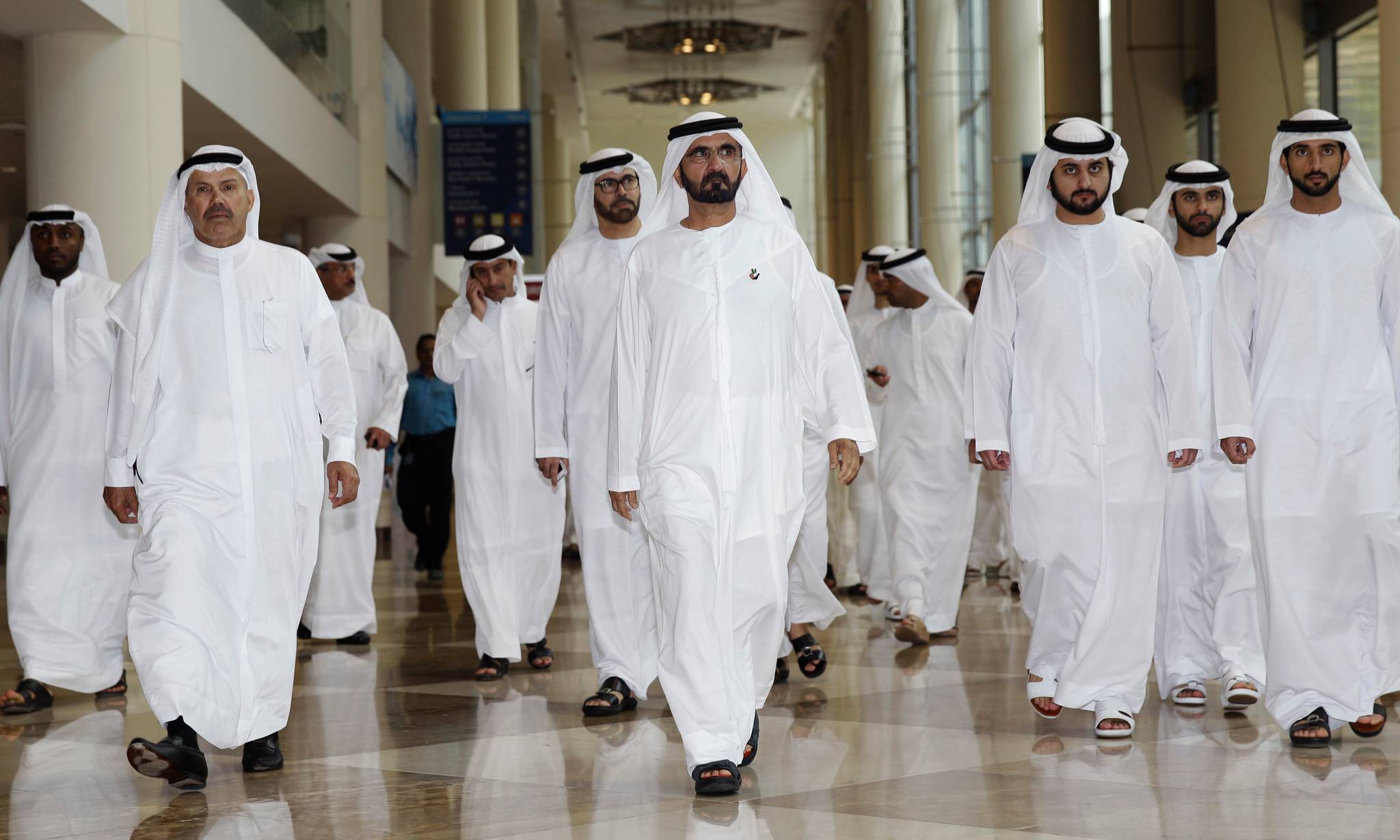
People love to throw around the idea of Dubai’s “200-year-old monarchy.” The Al Maktoum dynasty has been in charge since 1833—sounds impressive, right? But let’s break it down. Who actually holds the power? Who controls the financial pipelines? And what is Dubai’s real function in the global capital game?
Dubai wasn’t built on sand—it was built on capital. And capital, as we all know, flows where it’s allowed to flow.
How the Al Maktoums Took Power
The Al Maktoum dynasty comes from the Bani Yas tribe, and in 1833, they split from Abu Dhabi and strolled into Dubai unchallenged. Absolute power? Not even close. By then, the British Empire had already locked down the region. In 1820, they made local sheikhs sign a “General Maritime Treaty,” and by 1892, Dubai was officially a British protectorate. That meant no foreign deals, no real independence—unless London approved. So let’s be real—how much power did they actually have? Were they true monarchs with absolute control, or just managers in kanduras, overseeing a financial playground for global elites?
Sure, the Al Maktoums got to wear the crown, but their throne was propped up by the Empire.
A Dynasty Backed by Empires
When the British established dominance in the Gulf in the 19th century, they didn’t need to impose direct rule. They had a better strategy—find the right local players, give them just enough autonomy to keep their people in check, and ensure absolute loyalty in return. That’s exactly where the Al Maktoums fit in. They seized power in Dubai in 1833 but quickly realized true survival meant aligning with the real power brokers.
The British signed treaties with Gulf rulers, offering “protection” while controlling external trade and military decisions. Dubai’s rulers managed day-to-day affairs, but always within the geopolitical boundaries set by London. This wasn’t unique to Dubai—the same playbook was used across the Middle East, from Jordan to Saudi Arabia.
The British Didn’t Appoint the Al Maktoums? Sure, Keep Telling Yourself That
Technically, no. Practically? Of course. The British didn’t need to draft royal decrees—they just needed to give the right people protection, trade monopolies, and a leash short enough to keep them in check. It was classic empire strategy: find local elites willing to play along, hand them some power, and wipe out the ones who didn’t get with the program.
This model wasn’t unique to Dubai. The Hashemites in Jordan? British-backed puppets. The Saudis? Won the British-American sponsorship lottery. Even the Assads in Syria had British ties before shifting alliances. The Al Maktoums weren’t special—they were just the best candidates for the job.
From Colonial Puppet to Global Financial Hub
When Britain withdrew from the Gulf in 1971, Dubai didn’t suddenly become independent—it simply changed sponsors. The emirate reinvented itself as a global offshore financial hub, a convenient place for wealth to move without excessive oversight. Oil played a role in early development, but let’s not kid ourselves—Dubai was never about oil. It was about trade routes, capital flows, and providing a safe, regulation-light haven for money that needed to stay out of reach.
What followed was a calculated transformation into the “Las Vegas of the Middle East”—an ultra-modern metropolis, engineered to attract capital and talent while keeping real power where it’s always been: outside its borders.
Independence? Only on Paper
When Britain pulled out of the Gulf in 1971, Dubai technically became independent. But the management structure remained the same—just with new players. Instead of colonial rulers, control shifted to multinational corporations, financial institutions, and global investors.
Also in 1971, China started its “ping-pong diplomacy,” the first step toward opening itself to Western capital. In 1973, the oil crisis sent crude prices soaring, flooding the Gulf with cash and pushing investors to find safe havens. Convenient timing? Not really. Dubai was always meant to be a capital hub, and the ruling family? Just the local franchise managers.
Where the Real Money Is
Not in Dubai’s banks, that’s for sure.
The true wealth of Dubai’s elites isn’t stored in those shiny skyscrapers. It’s parked in London, New York, Switzerland, and increasingly, Singapore—where the real decision-makers play. Dubai is just a convenient offshore node, a tax-friendly transit point for global money flows. The real power doesn’t wear kanduras; it wears tailored suits in financial boardrooms.
The rulers of Dubai might control the city, but they don’t control the game.
Why Your Beachfront Property Will Be Buried Under a New One
Dubai isn’t just built on sand—it’s built on disposable geography. If your “prime” waterfront apartment has a great view today, give it a few years. That view might be blocked by a brand-new artificial island. They’ve been doing it for decades:
- Jebel Ali Palm – 6 years (2002-2008)
- Dubai Islands – 4 years (2004-2008)
- Dubai Harbour – 2 years (2018-2020)
- Emaar Beachfront – 2 years
Gone are the days of intricate mega-projects. Now it’s just: dump sand, stack 50-story towers, repeat. Take Dubai Islands Beach—fifteen years ago, it was open water. Now? Concrete and glass. If your “forever sea view” sits on five meters of shallow water, it’s not an investment—it’s a temporary privilege.
The Managed Throne
The Al Maktoums are not absolute rulers. They have power within the limits that are permitted. They manage Dubai like a high-end business—balancing foreign investment, strategic partnerships, and domestic stability. But the moment their usefulness is questioned, the moment they step outside the boundaries set for them, they can be replaced.
And that’s the brutal truth. Dubai is a city built on shifting sands, both literally and politically. The people who truly hold power aren’t the ones with golden palaces, but the ones with aircraft carriers, banking networks, and the ability to decide which financial hubs get to thrive.
The illusion of power is strong, but at the end of the day, it’s just that—an illusion.
Monarchy or Management?
Let’s be blunt: Dubai isn’t an “absolute monarchy.” A real monarch has unchecked power. The Al Maktoums have exactly as much power as they are allowed to have. The second they step out of line, their golden spoon can be swapped for a rusted ladle. They know it, which is why they play the game—build the skyline, host the right people, keep the banking system friendly, and don’t challenge the real decision-makers.
The Ministry of Happiness: Manufacturing the Illusion
Dubai has a Ministry of Happiness. Let that sink in. In most countries, governments deal with things like infrastructure, education, and healthcare. But in Dubai? Happiness. Because in a city built to attract capital, perception is everything. And certain topics? Off-limits.
What happens when you question the glittering façade? When you mention the things that don’t make it into the glossy brochures? The lack of a proper sewage system, for example—how Dubai, a city of millions, still relies on an army of trucks to haul away human waste. One failure in logistics, one moment of mismanagement, and the city could drown in its own filth.
Or what about the air? That fine layer of dust settling on your skin isn’t just from the latest construction project—it’s a constant, choking haze of sand, pollution, and industrial emissions. Respiratory issues? What respiratory issues? Just take a deep breath of “progress.”
And let’s not talk about the floods. A city built in the desert, engineered to defy nature, yet every year, a few hours of rain turn the roads into rivers. Because when you prioritize aesthetics over resilience, a sudden downpour can expose the cracks—both literal and metaphorical.
Dubai functions on a simple rule: as long as capital flows, the illusion holds. The Ministry of Happiness exists not to improve lives, but to ensure nobody looks too closely. To remind everyone—residents, investors, influencers—that negativity is bad for business. The narrative must remain intact.
Because if people start asking the wrong questions—why the city can be turned off like a light switch, why basic infrastructure remains fragile, why the skyline masks environmental and logistical nightmares—then the illusion collapses.
And that can’t happen. Not yet. There’s still more wealth to extract.
The Bottom Line
Dubai is an illusion. An illusion of monarchy, an illusion of stability, an illusion of independence. It’s a high-tech mirage, a futuristic theme park designed to dazzle while the real power operates in the shadows. The people who actually run the show don’t sit in Dubai’s palaces. They sit in London and New York, making decisions that shape financial flows far beyond the city’s glass towers.
Look past the skyline, and you’ll see who really calls the shots.
